


VTR1000 Dynamic Engine Simulation

Thread Starter
Senior Member
SuperBike
Joined: Dec 2005
Posts: 1,689
From: South Lake Tahoe, CA, USA

VTR1000 Dynamic Engine Simulation
I've been tossing it around for a while now - years actually.
I have started a detailed dynamic model of a Super Hawk 90 degree V-twin engine. I just have to get a grasp on how it all works from a motion/force/acceleration standpoint.
If anybody is interested, I will post details of the development and give insight to how this type of modelling is done and graphs showing forces torques, acceleration, imbalance, etc.
Most people have no idea how this is done, since it requires an ME background, but it is quite interesting. I will do my best to develop the necessary background as to how motion is described and force is calculated. I'm developing it for my own interest, but also to show my son how it works.
Maybe I can stimulate someone to pursue a career in engineering. We need more engineers and fewer investment bankers, IMO.
Anybody interested?
I have started a detailed dynamic model of a Super Hawk 90 degree V-twin engine. I just have to get a grasp on how it all works from a motion/force/acceleration standpoint.
If anybody is interested, I will post details of the development and give insight to how this type of modelling is done and graphs showing forces torques, acceleration, imbalance, etc.
Most people have no idea how this is done, since it requires an ME background, but it is quite interesting. I will do my best to develop the necessary background as to how motion is described and force is calculated. I'm developing it for my own interest, but also to show my son how it works.
Maybe I can stimulate someone to pursue a career in engineering. We need more engineers and fewer investment bankers, IMO.
Anybody interested?
Thread Starter
Senior Member
SuperBike
Joined: Dec 2005
Posts: 1,689
From: South Lake Tahoe, CA, USA
Can anyone tell me an easy way to display graphics on the board (diagrams, etc)? Can I upload PDFs?
So far, I have the equations of motion (position, velocity and acceleration) for the crank, rods and pistons. I'll have to give some background before I can present them in a way that is comprehensible.
So far, I have the equations of motion (position, velocity and acceleration) for the crank, rods and pistons. I'll have to give some background before I can present them in a way that is comprehensible.
Last edited by RCVTR; Nov 18, 2008 at 04:49 PM.


Junior Member
Squid
Joined: Jan 2008
Posts: 27
From: Bay Area, CA

That sounds like a great project! I'd love to contribute to your efforts. I happen to be a gearhead turned ME, so I could provide technical input, write-ups, ITR (Independent Technical Review), etc. I also have a couple Superhawk engine cores that could be opened for photos. My free time is limited, but I'm always available for a good cause. PM me if there is anything I can do to help you out.
Thread Starter
Senior Member
SuperBike
Joined: Dec 2005
Posts: 1,689
From: South Lake Tahoe, CA, USA
I want to start with a basic description of the motion of a piston. Everything builds from there, and yes, there will be graphics later.
Let's start with one piston. It travels from ene end of the stroke to the other. It is only free to move along it's stroke path. It's motion is restricted in all other directions by the fact that it is contained in a cylinder. (Obvious, but necessary to describe the motion).
Next, I'll define some motion concepts of linear motion:
d = delta, which I will define as "the change in"
p = position - Where the piston is at a given time (t).
v = velocity - the rate of change of the position with time = dp/dt
a = acceleration - the rate of change of velocity with time = dv/dt
For ease of description, position, velocity and acceleration can be in either direction, and maximum can mean maximum, or minimum, interchangably.
As the piston reaches the end of the stroke (either end), it slows to a stop (v=0), then changes direction and accelerates in the other direction. At midstroke, the velocity reaches a maximum, then the piston accelerates in the other direction until it reaches the other end of the stroke maximum postion, and velocity is again 0.
So when position (p) is maximum, velocity (v) is 0 and acceleration (a) is maximum in the opposite direction. When velocity is maximum, position and acceleration are zero.
Hold that thought. It will be important later. Next I'll talk about rotation.
Your homework:
Look up sine wave in Wikipedia.
Let's start with one piston. It travels from ene end of the stroke to the other. It is only free to move along it's stroke path. It's motion is restricted in all other directions by the fact that it is contained in a cylinder. (Obvious, but necessary to describe the motion).
Next, I'll define some motion concepts of linear motion:
d = delta, which I will define as "the change in"
p = position - Where the piston is at a given time (t).
v = velocity - the rate of change of the position with time = dp/dt
a = acceleration - the rate of change of velocity with time = dv/dt
For ease of description, position, velocity and acceleration can be in either direction, and maximum can mean maximum, or minimum, interchangably.
As the piston reaches the end of the stroke (either end), it slows to a stop (v=0), then changes direction and accelerates in the other direction. At midstroke, the velocity reaches a maximum, then the piston accelerates in the other direction until it reaches the other end of the stroke maximum postion, and velocity is again 0.
So when position (p) is maximum, velocity (v) is 0 and acceleration (a) is maximum in the opposite direction. When velocity is maximum, position and acceleration are zero.
Hold that thought. It will be important later. Next I'll talk about rotation.
Your homework:
Look up sine wave in Wikipedia.
Last edited by RCVTR; Nov 19, 2008 at 10:44 AM.

Thread Starter
Senior Member
SuperBike
Joined: Dec 2005
Posts: 1,689
From: South Lake Tahoe, CA, USA
Once you have the dynamics, you can calculate stress and strain on the components. The rod stretch would involve taking the tensile force, integrating the over the varying cross-section of the rod. I'll leave that exercise to you, once I give you the tensile force  .
.
But first, we have some more things to define. My wife couldn't believe I was doing this last night. She asked me who would be interested. I said "motorcycle people". she said "Oh my God" and went to bed.
*Attachment moved*
.But first, we have some more things to define. My wife couldn't believe I was doing this last night. She asked me who would be interested. I said "motorcycle people". she said "Oh my God" and went to bed.
*Attachment moved*
Last edited by RCVTR; Dec 9, 2008 at 09:54 AM.

AZ RIDER
Superstock
Joined: Jul 2008
Posts: 294
From: Arizona
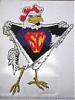
what the hell is that??? It looks like the mole on my back !!
So let me get this straight___ this ultimatley means more throttle twist means you go faster through the twisties over less time and then k over m with a red dot???
Awsome
So let me get this straight___ this ultimatley means more throttle twist means you go faster through the twisties over less time and then k over m with a red dot???
Awsome
Last edited by lynchie; Nov 20, 2008 at 11:52 AM.

Thread Starter
Senior Member
SuperBike
Joined: Dec 2005
Posts: 1,689
From: South Lake Tahoe, CA, USA
Actually, the crank pushes and pulls on the piston in the same way a spring does. It may not seem like it, but the math is the same. So think of the sine wave as the piston moving back and forth, with a pen attached, writing on a piece of paper that is moving by at a constant speed, creating a "time axis".
Oh, and please - no photos.
Last edited by RCVTR; Nov 20, 2008 at 01:22 PM.
Thread Starter
Senior Member
SuperBike
Joined: Dec 2005
Posts: 1,689
From: South Lake Tahoe, CA, USA
Thread Starter
Senior Member
SuperBike
Joined: Dec 2005
Posts: 1,689
From: South Lake Tahoe, CA, USA
I don't think you'd want to try it in excel. But I'm not that good at modelling in Excel. You won't like doing it with a calculator
You'll need an iterative equation solver. Start with a known initial condition, such as 1 piston at top dead center, the other at midstroke, and define the known lengths and angles, then step through a full revolution in small angle increments of the crankshaft.
If you use a constant crankshaft speed, you can just solve the velocity and position equations.
I'm going to use Matlab, or EES. I'd like to use EES, but Im not sure I can get the graphical output I want to present. I'm too busy right now. This is a project that will take shape over several months. I hope to have the motions done this week.
Ultimately, I want to solve the balance problem. When I was building my engine, I put lighter pistons in and wanted to figure out how much material to remove from the crank, to rebalance. But then the riding season was coming, and I was advised not to worry about it, so I put it together and rode the **** out of it!
I have most of the weight measurements, and a solid model of the crank that I developed back then.
You'll need an iterative equation solver. Start with a known initial condition, such as 1 piston at top dead center, the other at midstroke, and define the known lengths and angles, then step through a full revolution in small angle increments of the crankshaft.
If you use a constant crankshaft speed, you can just solve the velocity and position equations.
I'm going to use Matlab, or EES. I'd like to use EES, but Im not sure I can get the graphical output I want to present. I'm too busy right now. This is a project that will take shape over several months. I hope to have the motions done this week.
Ultimately, I want to solve the balance problem. When I was building my engine, I put lighter pistons in and wanted to figure out how much material to remove from the crank, to rebalance. But then the riding season was coming, and I was advised not to worry about it, so I put it together and rode the **** out of it!
I have most of the weight measurements, and a solid model of the crank that I developed back then.
Thread Starter
Senior Member
SuperBike
Joined: Dec 2005
Posts: 1,689
From: South Lake Tahoe, CA, USA
Here's a picture of the test setup I used to calculate the moment of inertia of the crankshaft, based on the oscillation frequency. I set the journal on small gauge pins and measured with a stop watch.
I don't think I ever got very good agreement with the solid model, and it was time to put it back in the engine. I still have the numbers, so I'll try to figure it out.

I don't think I ever got very good agreement with the solid model, and it was time to put it back in the engine. I still have the numbers, so I'll try to figure it out.


 Nice writeup.

Out of my mind, back in 5
MotoGP
Joined: Nov 2006
Posts: 6,109
From: Skurup, Sweden
You know... I'm considered a complete nut amongst my friends... I tear apart everything to have a look inside... And I will model some small portions if I need it to figure out stuff (quite familiar with Matlab)... But this is a bit more impressive...
I will however do the same to about any electronics I come across... (Anybody have a need for a component list for the main curcuits in the VTR? or a schematic? I can provide them...)
Oh come now Hawkrider... You have your ways to cure it... Me... I tear apart stuff and rebuild them... some measure them first...
I will however do the same to about any electronics I come across... (Anybody have a need for a component list for the main curcuits in the VTR? or a schematic? I can provide them...)
Oh come now Hawkrider... You have your ways to cure it... Me... I tear apart stuff and rebuild them... some measure them first...
Thread Starter
Senior Member
SuperBike
Joined: Dec 2005
Posts: 1,689
From: South Lake Tahoe, CA, USA
I think there's a few of us here with that gene.
Thanks, but it's not that impressive, at least I can't claim to have invented it. The slider-crank model of a piston and crank are a classical dynamics problem.
My interest in providing the description was to show how easy it is, if you have the right approach. Nothing magic. Just a practical application of math that most people never see. Cool problem, though. And once we have the model developed, we can try all kinds of things.
Thanks, but it's not that impressive, at least I can't claim to have invented it. The slider-crank model of a piston and crank are a classical dynamics problem.
My interest in providing the description was to show how easy it is, if you have the right approach. Nothing magic. Just a practical application of math that most people never see. Cool problem, though. And once we have the model developed, we can try all kinds of things.

Senior Member
SuperBike
Joined: Aug 2005
Posts: 1,864
From: Fort Wayne, IN
Don't you need the moment of inertia about the center of rotation and not the rod journal? It doesn't do you much good to model the system about an axis that it does not rotate about.
Your picture of sinusoidal motion is misleading, all that you need is sin(t). The model you are suggesting should not take into effect the flexibility of parts and therefore the spring constant would be zero or infinity depending on the situation.
Your picture of sinusoidal motion is misleading, all that you need is sin(t). The model you are suggesting should not take into effect the flexibility of parts and therefore the spring constant would be zero or infinity depending on the situation.
Thread Starter
Senior Member
SuperBike
Joined: Dec 2005
Posts: 1,689
From: South Lake Tahoe, CA, USA
The moment of inertia can be translated to the center of rotation, if you know the distance between the swing axis and the actual rotation axis. I'll present the simple mathematics when I get around to it.
There is no spring. A mass on a spring exhibits simple harmoninc motion. A rotating shaft does too, but in two dimensions.
It has to be sin(omega)t. If you don't know the frequency, you can't calcualate y at time (t). I only used that diagram because it was the first example of simple harmonic motion I found.
The motion of a piston is not simple harmonic motion because the position varies with crank angle and connecting rod angle.
There is no spring. A mass on a spring exhibits simple harmoninc motion. A rotating shaft does too, but in two dimensions.
It has to be sin(omega)t. If you don't know the frequency, you can't calcualate y at time (t). I only used that diagram because it was the first example of simple harmonic motion I found.
The motion of a piston is not simple harmonic motion because the position varies with crank angle and connecting rod angle.
Senior Member
SuperBike
Joined: Aug 2005
Posts: 1,864
From: Fort Wayne, IN
No need. I'm also a BSME and have been doing analyses like this for almost 20 years now. I was just wondering why you would bother do experimentally measure it one way just to have to translate it. Why you would not measure it about the main journals confuses me.


